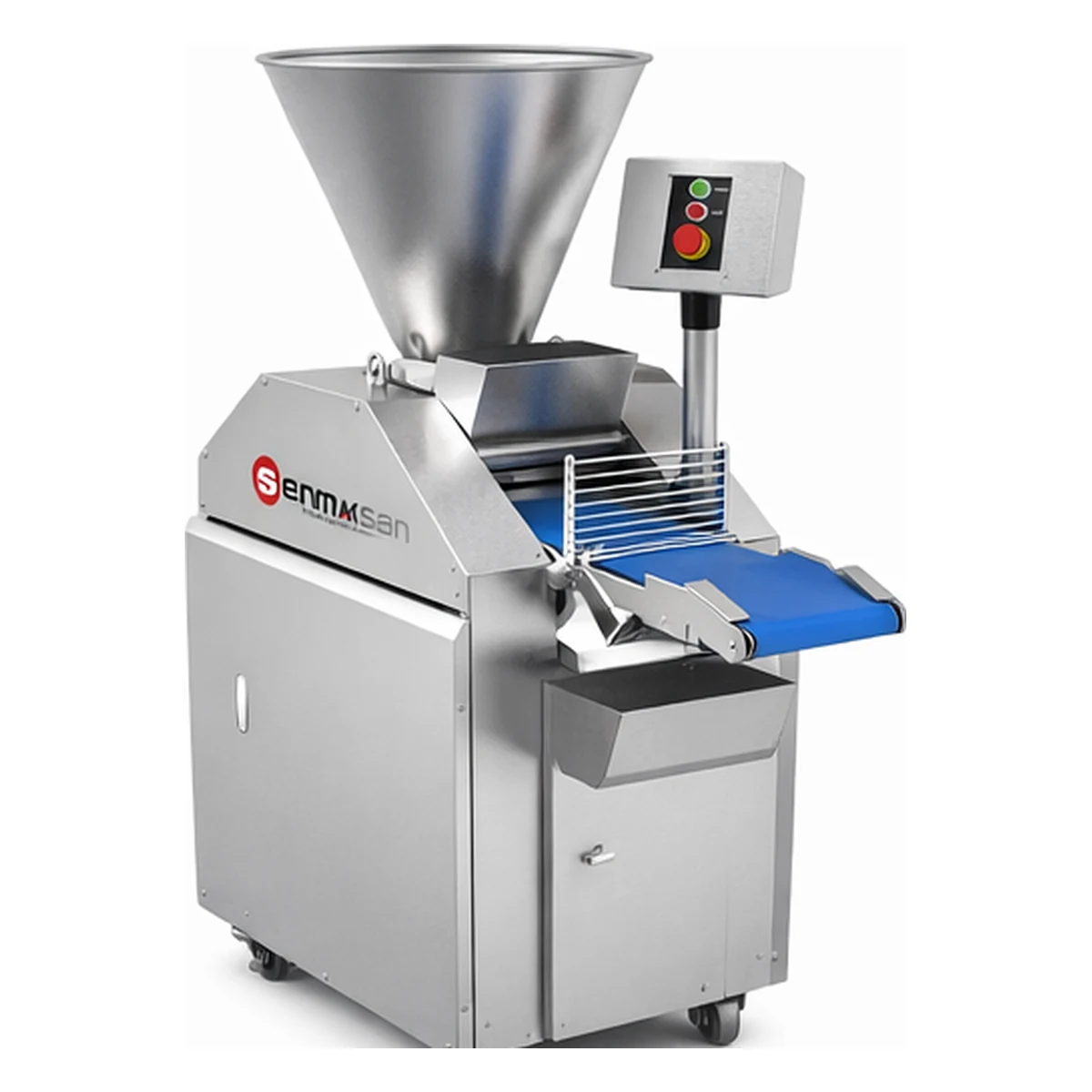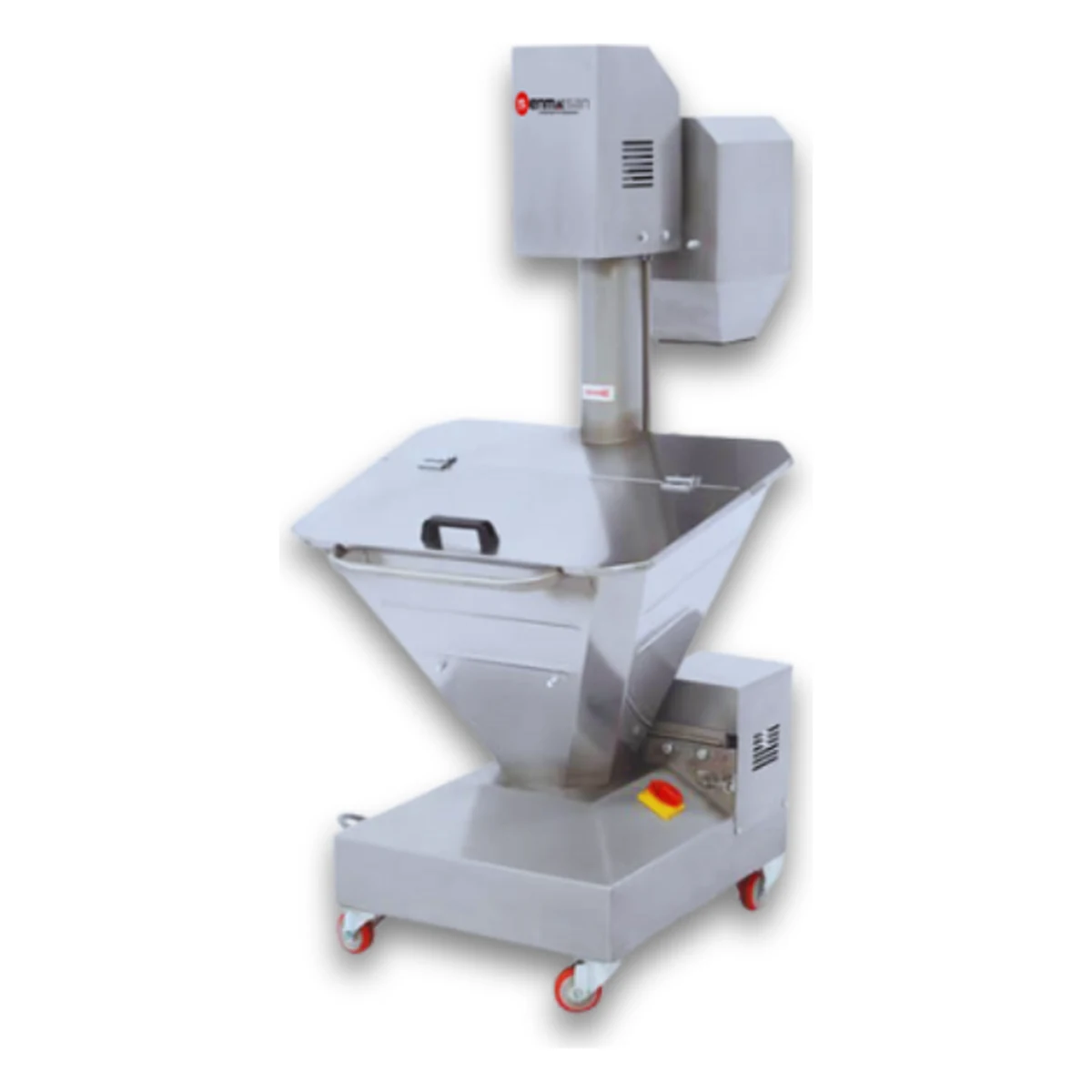
Dough pieces coming off a divider are irregular, and their cut faces are sticky. A dough rounder turns them into balls with a taut outer skin and an even inside. It looks like a small step, but it shapes how the dough behaves for the rest of the line.
Why rounding matters
- It holds the gas. Rounding tightens the outer skin, so the gas produced during proofing stays in and the loaf gets better volume.
- It evens out the shape. Every piece comes out the same, so it feeds smoothly into the moulder.
- It reduces sticking. The cut faces fold inside, so dough sticks less to belts and trays.
- It saves labour. Rounding by hand is tiring, and results change from one baker to the next.
Types of dough rounder
Conical rounder
The dough travels up a spiral channel around a cone and comes out as a tight ball. It is the most common type in bread bakeries. Our SYM conical rounders come in four models covering 30 g to 1000 g pieces, at 1,000–2,000 pieces an hour.
Horizontal (belt) rounder
The dough is rounded as it moves along a V-belt system. It handles larger pieces well; the SVB range works with 150–1200 g pieces.
Spiral dough ball rounder
A small, compact machine, popular for pizza dough balls. The SHHY300 rounds 50–300 g balls at 800–1,200 an hour, and at 75 kg it fits even a tight pizzeria kitchen.
Which one should you choose?
Go by the weight of the product you make most and by your volume. Bread bakeries usually need a conical rounder, larger loaves suit a horizontal rounder, and pizzerias get the most from a spiral dough ball rounder.
Because the rounder sits in the middle of the line, it has to keep up with the divider. If you are planning the whole line, our guide to the essential machines to open a bakery is a good place to start.