Why regular maintenance matters
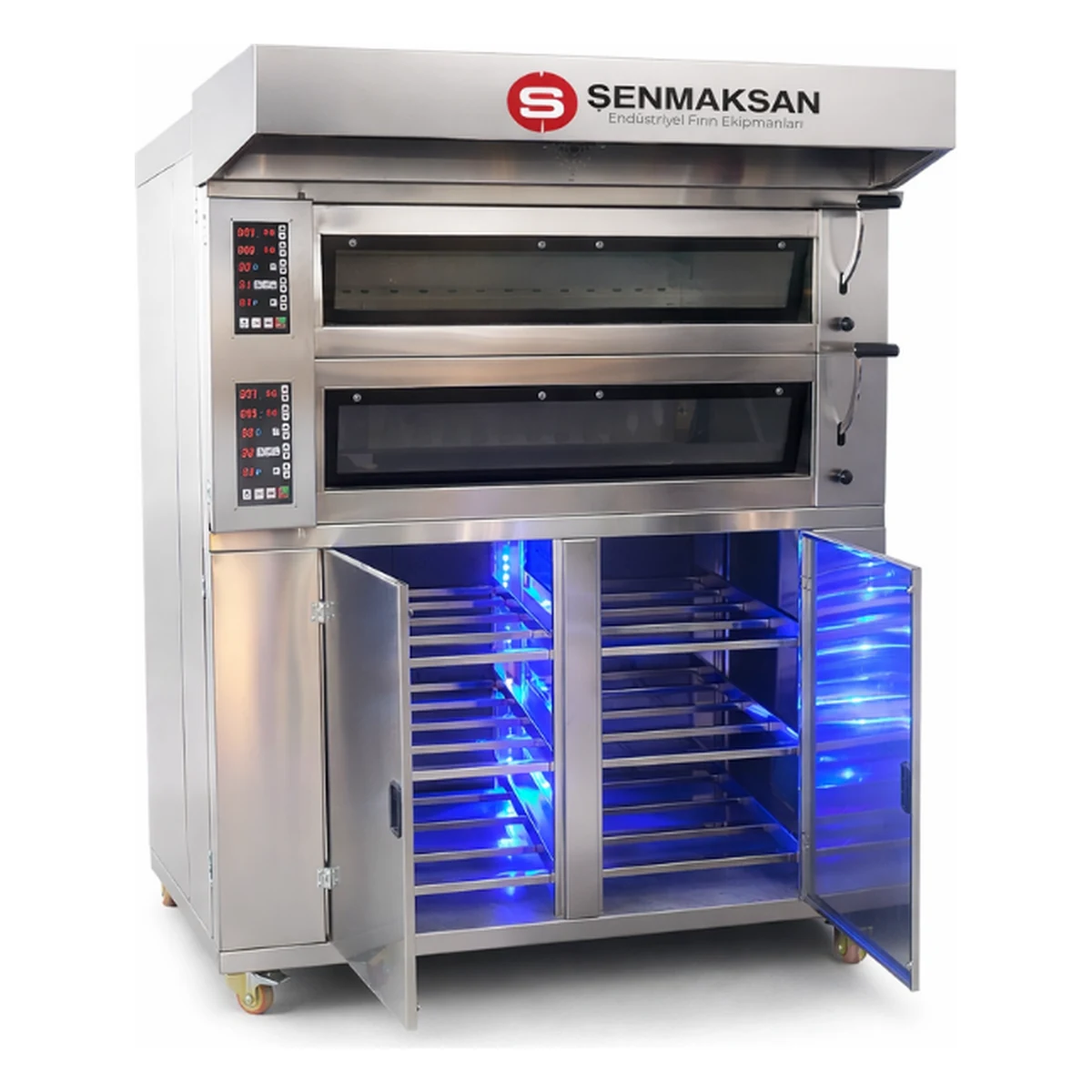
Industrial ovens run continuously under high heat, humidity and flour dust. These three factors wear down burners, fans and electronics. Unplanned downtime brings serious cost in lost production and spare-part lead times.
The checklist below covers the maintenance steps that will keep your oven running for 20 years instead of 10.
Daily maintenance (5 minutes)
- After the oven cools, dry-brush the chamber surface; flour dust and bread debris are a fire hazard.
- Check the door gasket — any crush or tear starts heat loss.
- Verify the thermostat and temperature display by comparing actual baking time.
- Visually confirm interior and exterior bulbs are working.
Weekly maintenance (30 minutes)
- Clean the burner air-fuel mixture grid; a yellowish flame indicates loss of efficiency.
- On models with a steam generator, inspect scale-prone surfaces.
- Brush off oil and dust on the exhaust fan blades.
- Review the control panel and error logs.
Monthly maintenance (1 hour)
- Measure insulation surface temperature with a contactless thermometer; localised hot spots indicate insulation damage.
- On rotary ovens, grease rack wheels and shaft bearings.
- Inspect water supply hose and steam valves for leaks.
Annual professional service
At least once a year, an authorised service should perform:
- Burner flue gas analysis (CO, NOx)
- Replacement of all sealing gaskets
- Temperature sensor and thermocouple calibration
- Electrical cabinet torque test (loose connections = fire risk)
- Photo-documented inspection of the ceramic blanket insulation
Keep a maintenance log
Record date, work performed and parts replaced after every service. This log is invaluable for warranty service, insurance and rapid diagnosis of future faults.
Conclusion
Regular maintenance cuts energy consumption by up to 15 percent and prevents downtime. We provide detailed maintenance protocols for our rotary rack oven and stone-base deck oven — contact our service team.